
Siblings Without Rivalry - Book Review
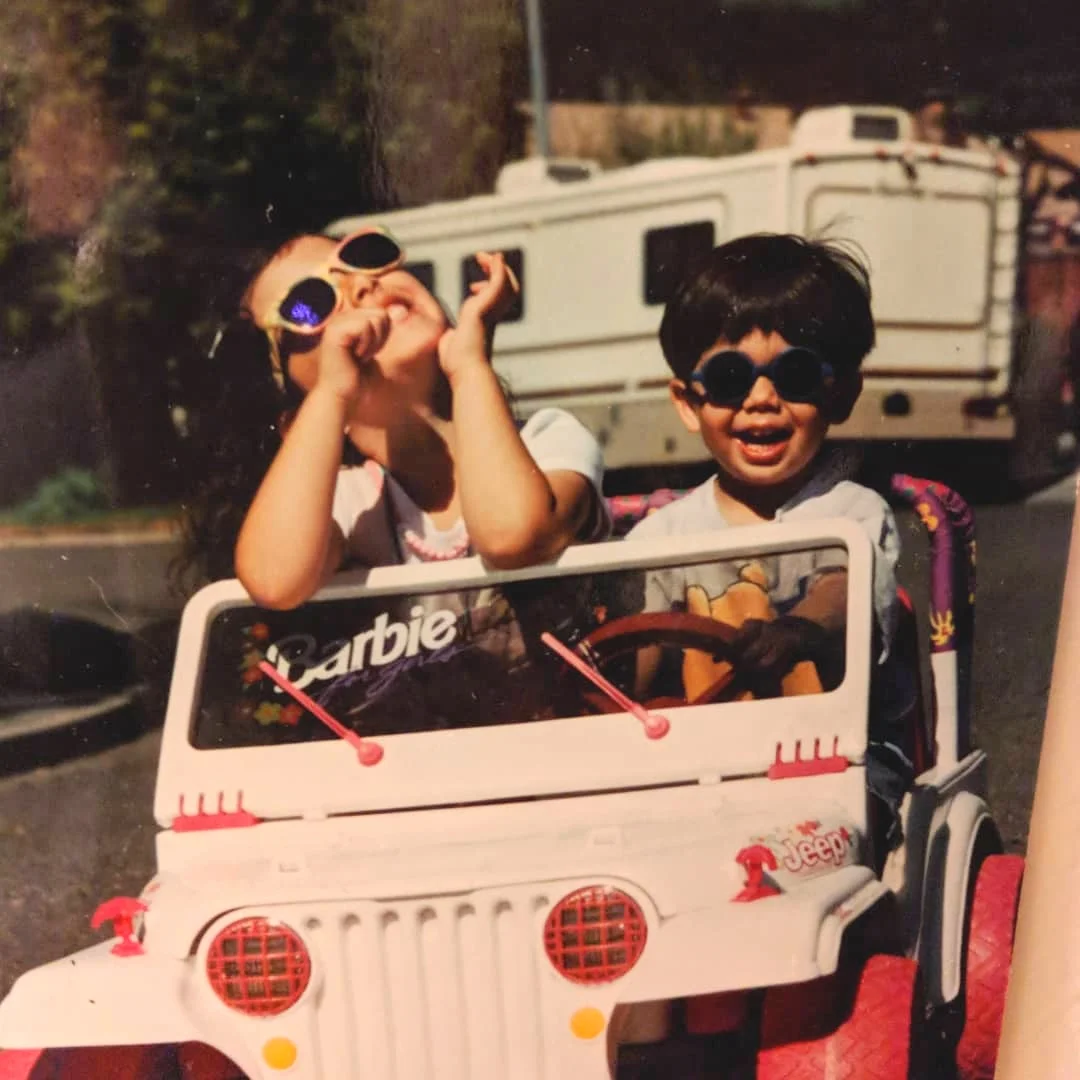
This is my brother and I. We look like we are having a great time, and we probably were at that very second, but I guarantee I hit him, pushed him, refused to give him his full length of a turn or convinced him that this car actually wasn’t any fun and he should leave.
We were siblings FULL of rivalry.
I’ll come right out and say it. I was a pretty shitty big sister. Although these cute photos show otherwise.
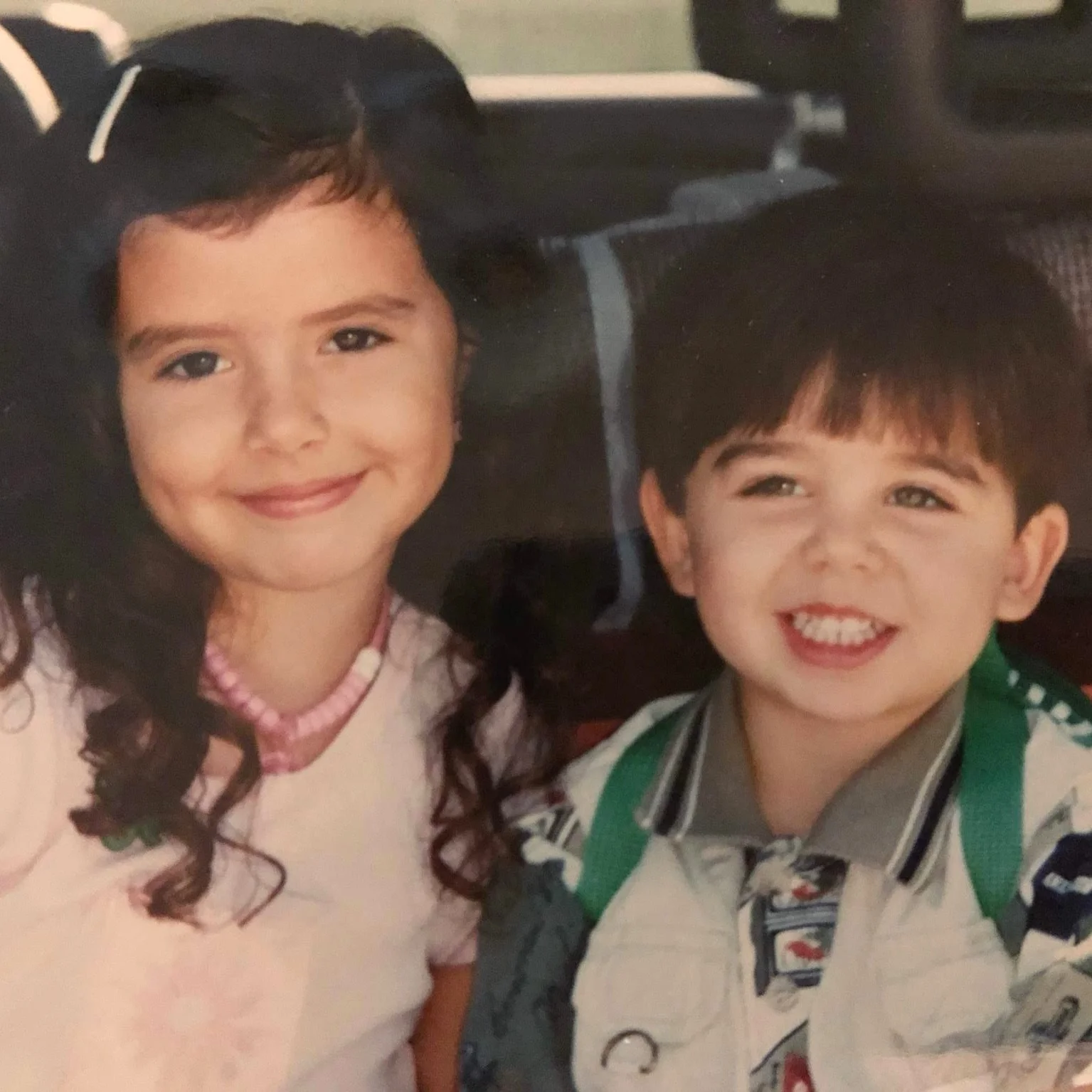
Brittni & Alex 1997
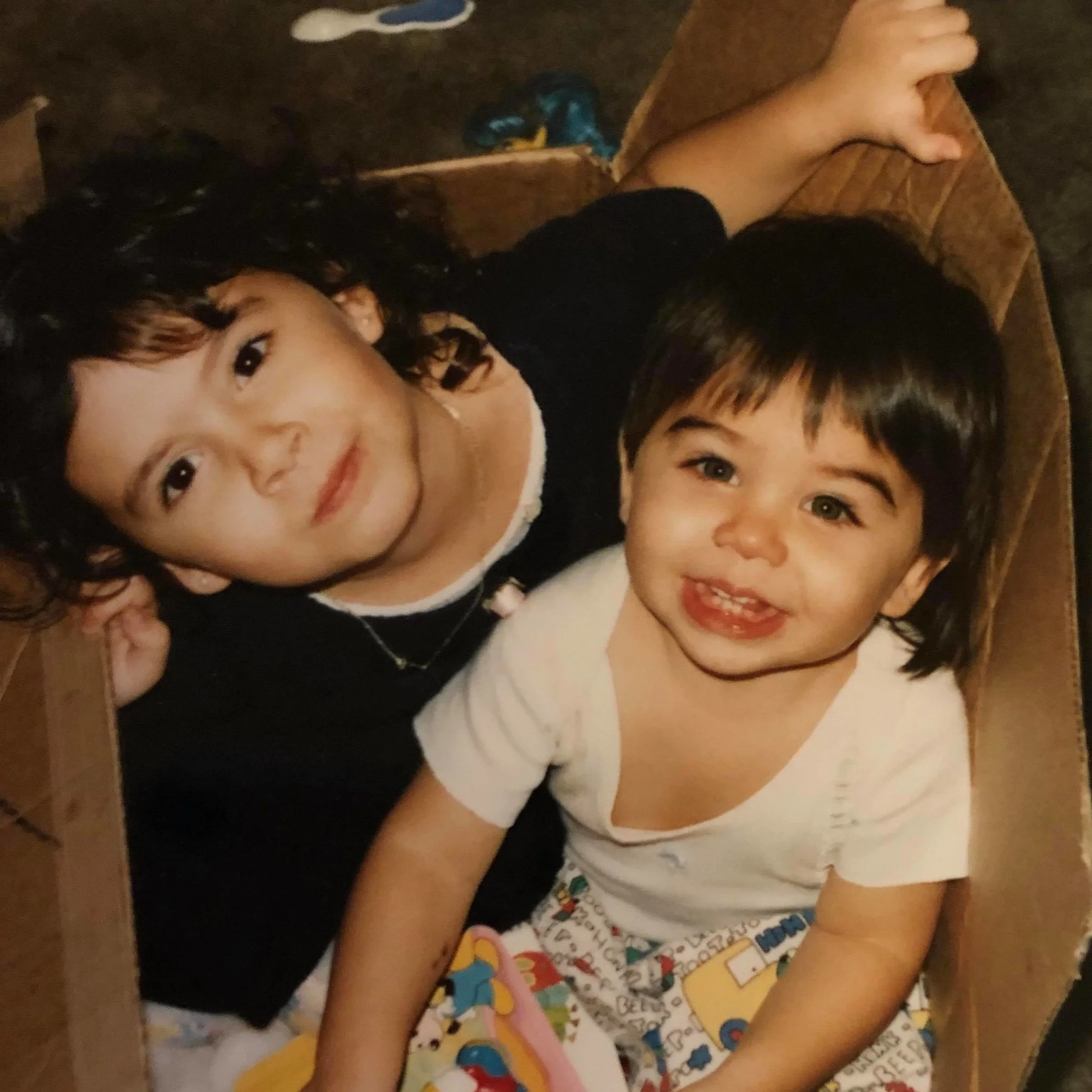
Brittni & Alex 1994
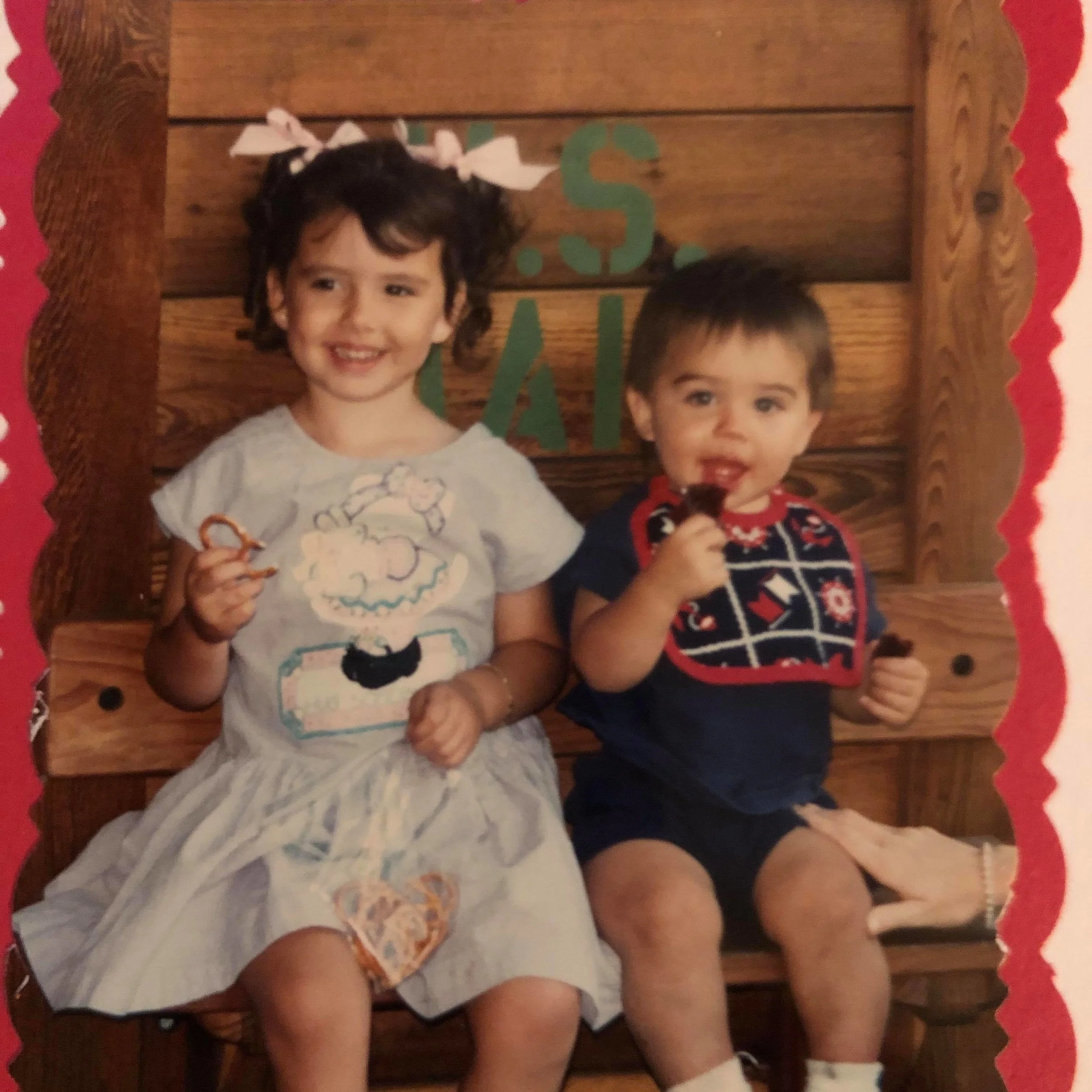
Brittni & Alex 1994
Knowing I wanted two children, I have taken a lot of time to reflect on that relationship and why it was so tumultuous. What made us interact that way? What actions did I take as a child, how did my mother react? How did my brother react? How can I prevent those same things from happening with my kids? What should I say? Not say? What’s the latest child development research? What’s the perfect age spacing for an optimal relationship?
I wanted to make sure I could recreate these moments, and avoid the crappy ones.
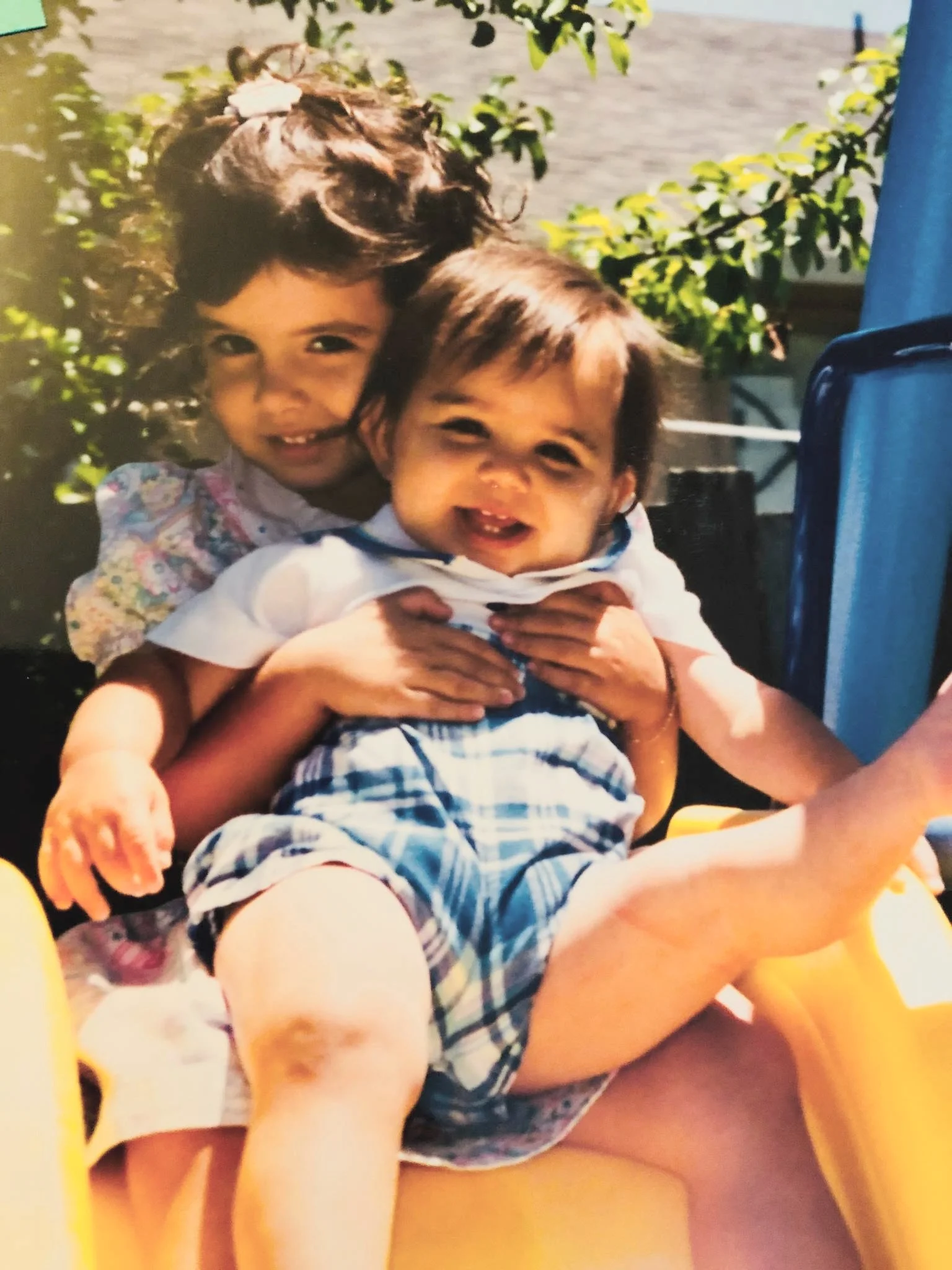
Brittni & Alex 1994
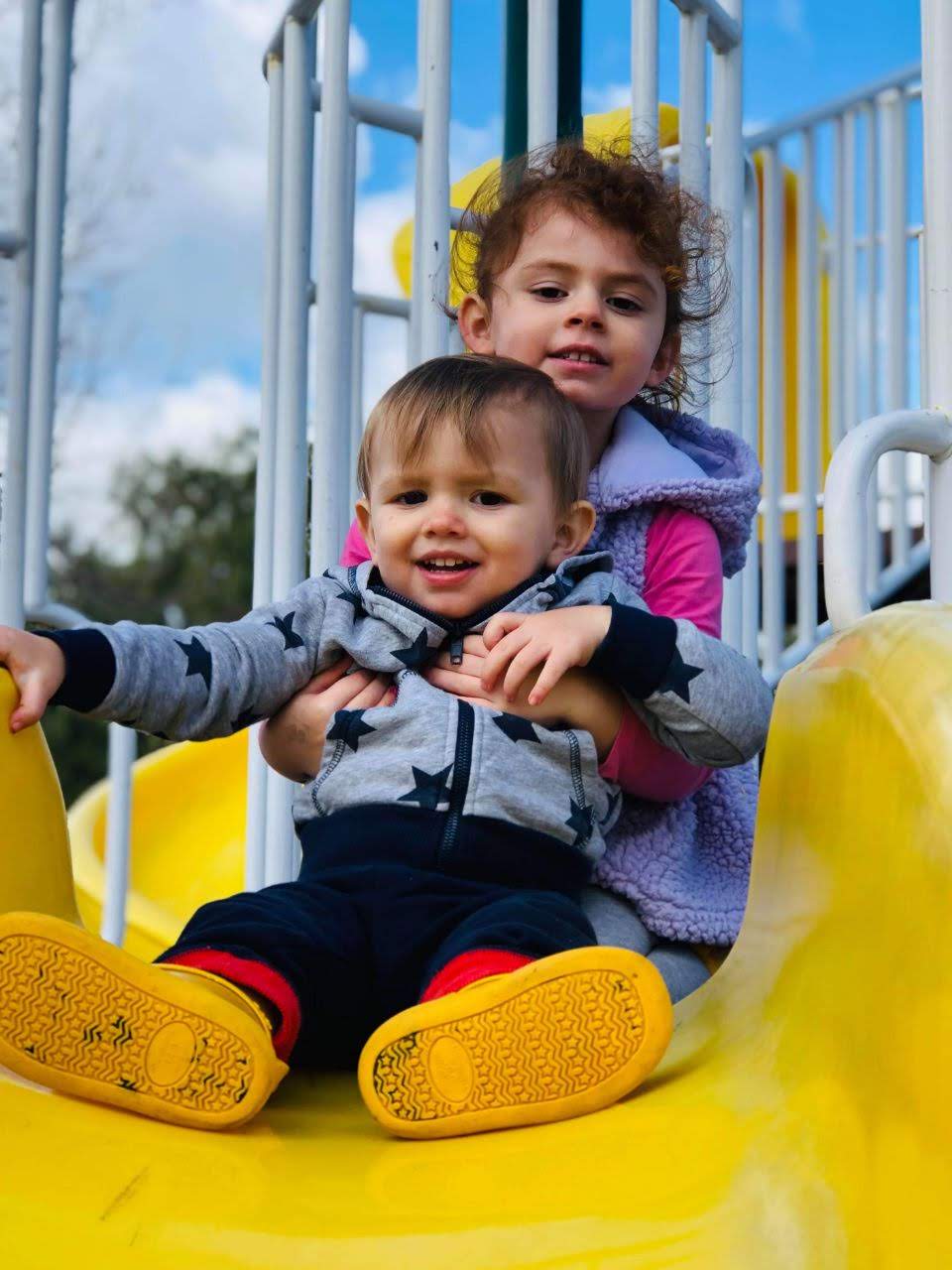
Cora & Max 2019

Brittni & Alex 1993

Cora & Max 2017
Just like with all aspects of parenting, I had all the answers - until I had my own children. Seriously, at 18 I was the best at everything. I wish some of that blind arrogance was still lingering to help me feel I was doing this all right.
Since now I am an adult and realize I know NOTHING, I recently listened to Sibling’s Without Rivalry to help me navigate how to nurture the sibling relationship between my 2 children. I’ve read lots of parenting books, but this is one I’d recommend over and over.
There are 3 tips that were most helpful to me, in understanding my own relationship with siblings, and in helping my children.
Don’t put your kids in roles.
My brother and I are 3 years and 3 months apart. I am the oldest, outspoken, and enjoy making decisions (aka bossy). He is easy going, quiet and sensitive. I was the mean big sister. He was the innocent little brother. I was great in school, messy and, creative. He was kind, tidy, and athletic. These were our roles. We stuck to them and used them to our advantages at times.
The Mean One: I used that label to avoid vulnerability as I got older. When our family was going through rough times, and I really needed a strong connection with my brother, I pushed him away, because that way I didn’t have to feel things so much. He was an easy target. He took the brunt of my regular teen angst, and the darker “my dad’s an addict angst”.
The Creative: It was an easy out to give up when anything became difficult. “I’m not good at sports”.
The Messy Student: So I don’t pick up my room as often, because “I have school AND work!”
I don’t know if this was conscious but I have a feeling he used his roles for his own benefit as well. When he actually was being a jerk, who would they believe? The mean sister? Or the innocent younger brother? So what if he didn’t get A’s. He used to say “I’m not good in school, my sister used up all the smart genes”. My insensitive retort likely would have been “If you tried in school, you’d know that’s not how genetics works”.
Roles are often assigned, and internalized, even if they happen to be dead wrong.
I was “great in school”.
I got to college and left with mostly B’s and C’s in easy classes where attendance was the most important metric. I shouldn’t have to try hard because “I’m good at this”.
My brother “struggled in school”.
He has straight A’s in college while working 40 hours a week.
In the Siblings Without Rivalry, the authors discuss how our kids will be placed in roles in every aspect of their life, from infancy to adulthood from everyone around them. Family, friends, doctors, teachers.
Is he a good baby?
Is she shy?
Are they competitive?
Does she like ballet?
Does he like soccer?
I got him a car!
I got her a doll!
Aww, she’s so sensitive.
Don’t cry buddy, you’re tough!
Your goal is to make sure your home a zone free from those roles. You can’t protect them from the outside world, but you can make sure they know their identity is not locked in for you. If you do place them in a role, make it a role you would like them to feel attached to and confident in.
You always try hard.
You Two work well as a team.
You are loved.
You are kind.
You are important.
Your voice matters.
You can make choices.
Alex and I were constantly put in roles. From everyone around us. Including our parents. The thing is, my mom generally tried to avoid the “you are just not great in math” or “You are just mean” comments. What did happen often, however, was placing the other sibling in roles for us. “School is easier for you than for your brother! Give him a break.” “She is just trying to make you upset, don’t let her attitude get to you”.
She didn’t tell him he wasn’t great in school, she gave me the confirmation that the role I put him in was valid so I continued to push him into that box. She didn’t say to me “you are just mean”, but she let my brother write me off as someone he shouldn’t bother having a relationship with.
To be clear, this is a far more complex dynamic than a few comments here and there, but when I read about roles, the concept immediately resonated and I recognize it as an adult.
I was just at my brother’s house in Chico. As soon as we arrived, I started to get defensive, make comments about how he is the golden child.
Did he actually DO anything? No. It’s autopilot. It takes a lot of effort to notice, recognize and correct that. I also felt like I could avoid going the extra mile to be a good house guest because everyone has already commented about how I was going to leave the place a mess anyways.
Was that the grown up choice? No. And I did clean up after myself and my kids. But Seriously, I can’t be the only one that falls back into old roles. There are way too many ‘back at home for the holidays rom-coms’ for me to be the only one that feels that way.
Do you notice you act differently when you go home for the holidays? My husband's voice and language choices change when he is around his parents. He doesn’t notice it at all. He’s code-switching, back into the role he feels he needs to fit around them.

Brittni & Alex 2019
This idea of roles isn’t a bad thing necessarily. Sometimes we need to fit the box. When I was teaching, I didn’t swear. It’s a role my students placed me in as “adult who never uses bad language” and I’ll go ahead and stay in that box for them at that moment.
The problem comes, I think, when we are not code-switching based on context and situation, but rather based on the person we are interacting with and who we think we need to be for them.
In the context of a family dynamic, this can be detrimental and seems to be the cause of so much sibling rivalry.
So how do I apply this “Don’t put kids in roles” practically for my kids? It’s constant. I am always trying to dismantle roles. Emphasis on trying.
Kids LOVE to put things in boxes and put themselves and others in roles.
Role: “Only girls can wear pink”
Providing an alternate role: “Boy’s can wear pink too”
Dismantling those roles: “No one’s color choices should be limited by gender. You can like any color. Max can like any color”
A mouthful I know. But that’s an exact sentence I said the other day. You know what? She heard me and preached it back later this week. I bought Max blue sandals. She said she liked them. I asked her if she wanted the pink or purple ones I saw in the girls' section. She said “I can like any color mom. Anyone can like any color! I can like red, or orange or yellow or green or blue or indigo or violet!” (she’s very proud of her rainbow color skills). Touche. “What color sandal would you like Cora?” she replied, “Pink and purple with sparkles!”.
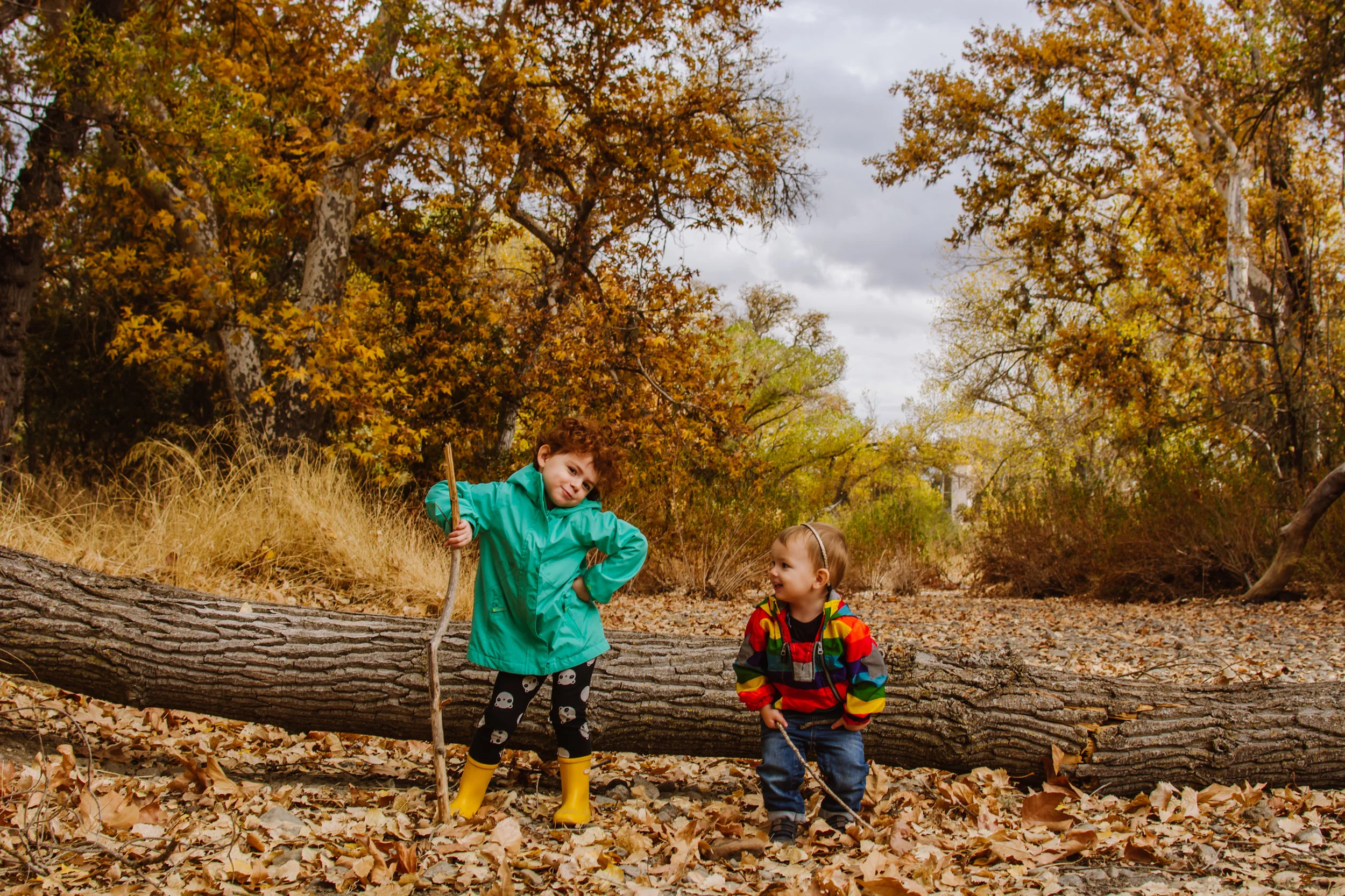
Cora & Max November 2018
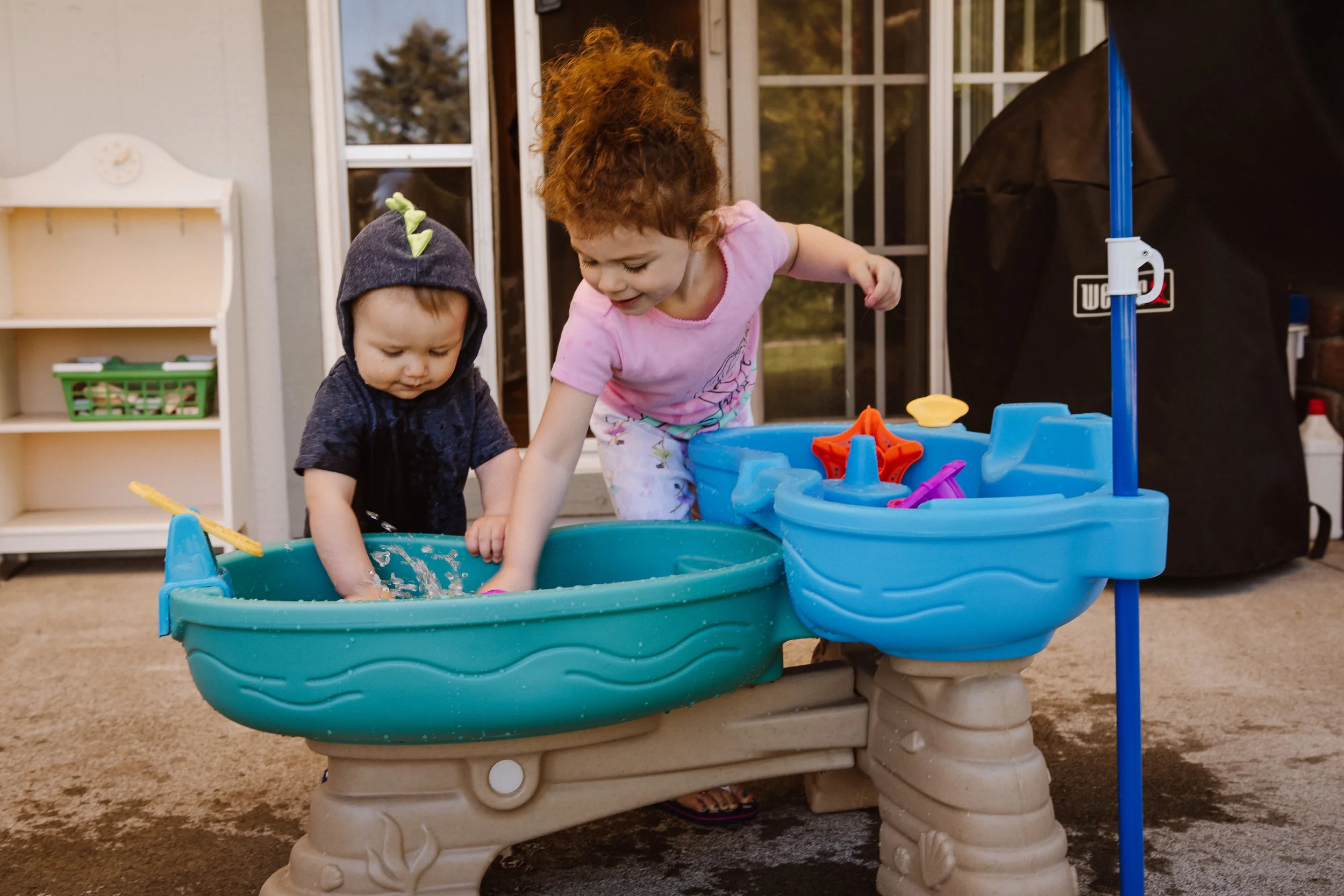
Cora & Max June 2018
Don’t try to fix the problem. Give them the power tools.
I say power tools because it’s not just the skill set they need to solve the problem, be the power and confidence to do so.
Problem: Cora wants to lock the door but Max is trying to do it! (a real daily argument)
Tools & Instructions: You can use your words and ask to take turns.
Action: They argue about who gets turn first
Problem: Cora wants to lock the door but Max is trying to do it! (a real daily argument)
Power Tools: You are great at finding solutions. What can you do to solve this problem? I bet you can figure it out.
Action: I have a great idea! Max, I will shut it, then you can lock it, and then I will lock the back door too!
It’s like that saying, “If you give a man a fish he’ll be fed tonight, but if you teach a man to fish he’ll be fed for life”. If you fix the problem for them, great, they know how to fix that exact problem the next time. Teach them how to effectively communicate and negotiate with each other and they will eventually solve problems on their own with very little interference from you. If things get rough, instead of taking the fishing pole back, you can just give pointers. “Try using a different bait”. Or “Try coming up with 2 more solutions and choose which one you like best.”
Do I do this all the time? Hell no. Most of the time I am exhausted and exasperated, breaking all the rules saying “Just give Max a turn! He’s little”. But, I am aware, and I try. I succeed often enough that those quotes from Cora are 100% real, and when they do fly out of her mouth I realize that even though those great parenting moments are few and far between, it’s enough that she is getting it.
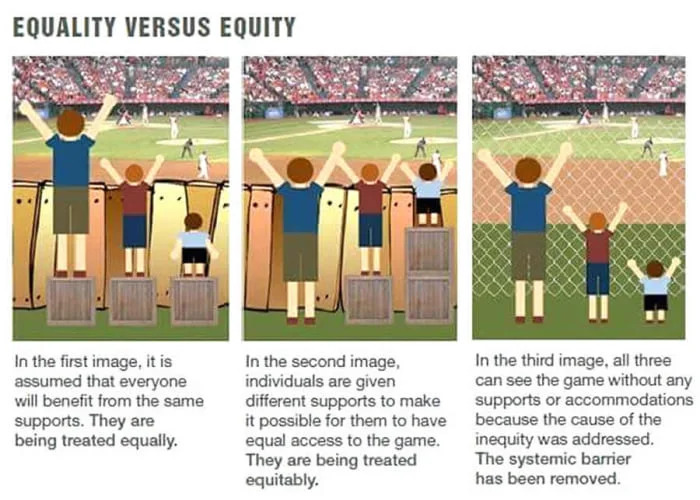
Equality VS Equity VS Justice
Equity > Equality
Lately Cora has been asking the question, “Who do you love most?”. The knee jerk response is “I love you both equally”. But that’s not true, and it’s not fair to them. Kids don’t want to all be treated exactly the same. The want to be loved in a way that is right for them. The hard part about this, is that all things equal would be easier on us as parents.
Something as simple as the gummy vitamins: 2 for you, 2 for him. Equal. But we can’t do that. Dosage goes by weight. She’s bigger than he is. 2 for you, 1 for him is equity.
The same goes for their socialization. Cora needed lots of guided small group activities with me present. She was incredibly shy and anxious as a young toddler and it took a lot to get her to participate with other kids. Max just needs a park and he is happy to play with anyone. I did feel guilty for a while about not putting Max in as many guided activities, but reflecting on his personality and needs made me realize that he would have fun, but he does need that like Cora did.
Max needs LOTS of physical activity. Cora is happy to paint and cook and read books all day, but she also likes to be outside. Equal time on each activity wouldn’t be fair. Max also needs naps. We are adjusting and now do our whole family time activities outside, and during nap time Cora gets her quiet activity time with mom.
These are things we do as parents naturally. But pointing it out is important. As my children get older, if they are anything like I was, they will accuse me of not being fair. The trouble comes when explaining this equity vs equality thing without putting your kids in roles. Try to address the needs of each child rather than place them in a role when explaining why. Or bride them with chocolate, whatever works best for you.
Roles
Max needs to be carried right now.
Why? I want to be carried!!
He’s a baby. You’re a big girl.
I’m a baby too! Carry me too!
vs.
Needs
Max needs to be carried right now.
Why? I want to be carried!!
His legs are tired. Are your legs tired?
Yeah. Okay, I don’t have enough hands to carry everyone, should we stop to rest our legs?
vs.
Chocolate (my reality)
Max needs to be carried right now.
Why? I want to be carried!!
UGH! Why did I not bring in the stroller?! Cora, I know you’re tired can you please just walk right now to help me? You can have a chocolate when we get in the car for being brave!
These are just 3 of the awesome takeaways from the book. Again, to reiterate, I am far from a parenting expert or perfect parent, but on National Sibling Day, I felt it was a good time to reflect on one of my recent reads and share what I learned. I would recommend if you have a sibling, or have a child. Even a single child. So many single children have cousins or very close friendships over their life that resemble sibling relationships and all of this information is really useful.
One last thing, Alex, if you are reading, I’m sorry. Read the book. It helps. I love you, even though I often pretended to hate you.